
Extra? Well, Maybe.
Fifth in a Mini-Series about the Many Sides of High School Life

So far under this high school umbrella that I opened up back in September, I’ve written about: the new ban on cell phones; how teenagers wonder about their futures; the worrisome (to some of us) trend of pulling away from public education; what it was like to return to the institution where I spent my own precious — sure feels that way now— years between almost-16 and almost-18.
Now I’m going to turn my attention to a fascinating area of teenage life, one chock-full of adjacency — the thing that gets my heart pounding. This one reliably shows up on college applications and resumes, in the form of pursuits that happen regularly, but outside the regular academic program. You know what they’re called…
“Extra! Extra! Read all about it!”
That’s what newspaper hawkers on street corners used to shout. This megaphone-holding person — a kind of cheerleader? — may be turning the volume way up on that classic plea…or advocating for something else that’s maybe not a regular touchdown.

Whether blared out or uttered quietly, the word can definitely take on different tones. Often, it tends towards “bonus” — you weren’t expecting this, but lo and behold, here it is, and isn’t it great? You’ve got a whole new opportunity for thriving. Maybe it will even transport you to “extraordinary.” Or maybe you’re just asking for extra sprinkles on that ice cream cone and they’re freely given.
On the other hand, someone across the hotel counter might be telling you, cheerfully of course, that you’ll be paying more than you anticipated, because, no, those services weren’t ever included.
Sometimes, when the word refers to an activity happening “outside of” something specific that we respect, such as marriage, it goes into the danger zone. We’ll leave that kind of “extra” alone in the corner, probably sulking, where it belongs.
You Do Your Thing and I’ll Do Mine
Most self-respecting high schools offer quite a range of these…Did yours?

My recent visit back to my old high school reminded me just what a richness of opportunities we had then, and current students have now. We can’t help but be in favor of a wide array of choices, because teens experience many different kinds of genuine sparks. And, if there’s not already a club for something, starting one might be an excellent idea.
Of course, there’s a whole industry out there — aiming for college admissions — that encourages teens to sign up for activities at least in part because they’ll be able to say that they do those things and thus appear engaged and therefore desirable. Here’s one that gives a whopping 160 suggestions: KD College Prep.
Sure — starting a Youth Investors or Mariachi or K Pop Club could all be great, so long as genuine interest is the incentive.
Depending on how you look at it, or how you actually experienced it, the range of after-school clubs and teams can provide both a strong sense of cohesiveness within each group — those baseball players definitely like to hang out together in the cafeteria, and there’s the purple and orange hair at the drama table — and also draw some lines between various entities. We keep our distance from you; you should, from us, too.
And woe to the students who, for one reason or another, aren’t joiners at all. Except, wait, many of them might really be just fine on their own: they could say for themselves.
Sometimes Your Extra Might Enlighten Mine, and Vice Versa
But students aren’t always hunkered in behind their activity barricades, thank goodness. They have their comfort zones and groups they stick with, but they often show an instinctive understanding that they can learn from peers who do something very different with their after-school time.
Last week I got to take two seniors, who happened to be friends, up to a “Exploring Careers in Accounting” program at Plymouth State University. One of them is already convinced that this is the pathway for her; the other leans more towards Engineering, but was curious. What struck me afterwards, apart from the takeaways of the program itself, was how much they’ve benefited from knowing one another, since 8th grade.
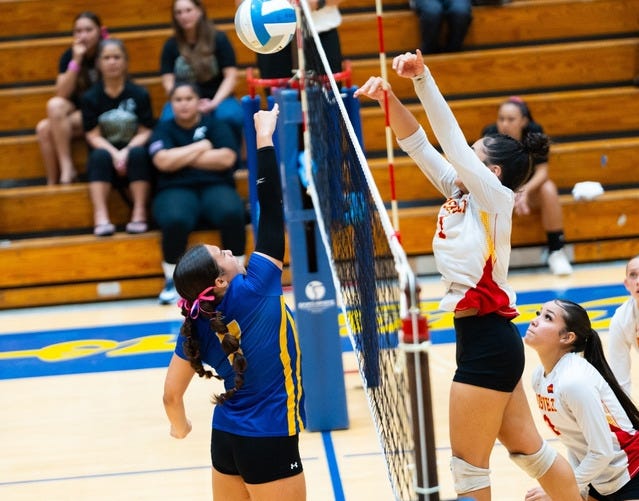
The girl is a three-sport athlete; for her, volleyball had just finished, and basketball is starting tryouts. She is accustomed to staying fit, practicing specific skills, communicating with teammates and giving her all when she’s put in a game.
The other student is a dedicated member of the school’s award-winning robotics team, all year ‘round. He stays after school until 6 pm each day, designing complicated things that move (OK, I need some education here) and collaborating with other students, using plenty of brain power. Sometimes we learn they’re heading off to somewhere like Kansas for a competition. Their family members and friends are not cheering in the bleachers; but the rewards, for him, are great.
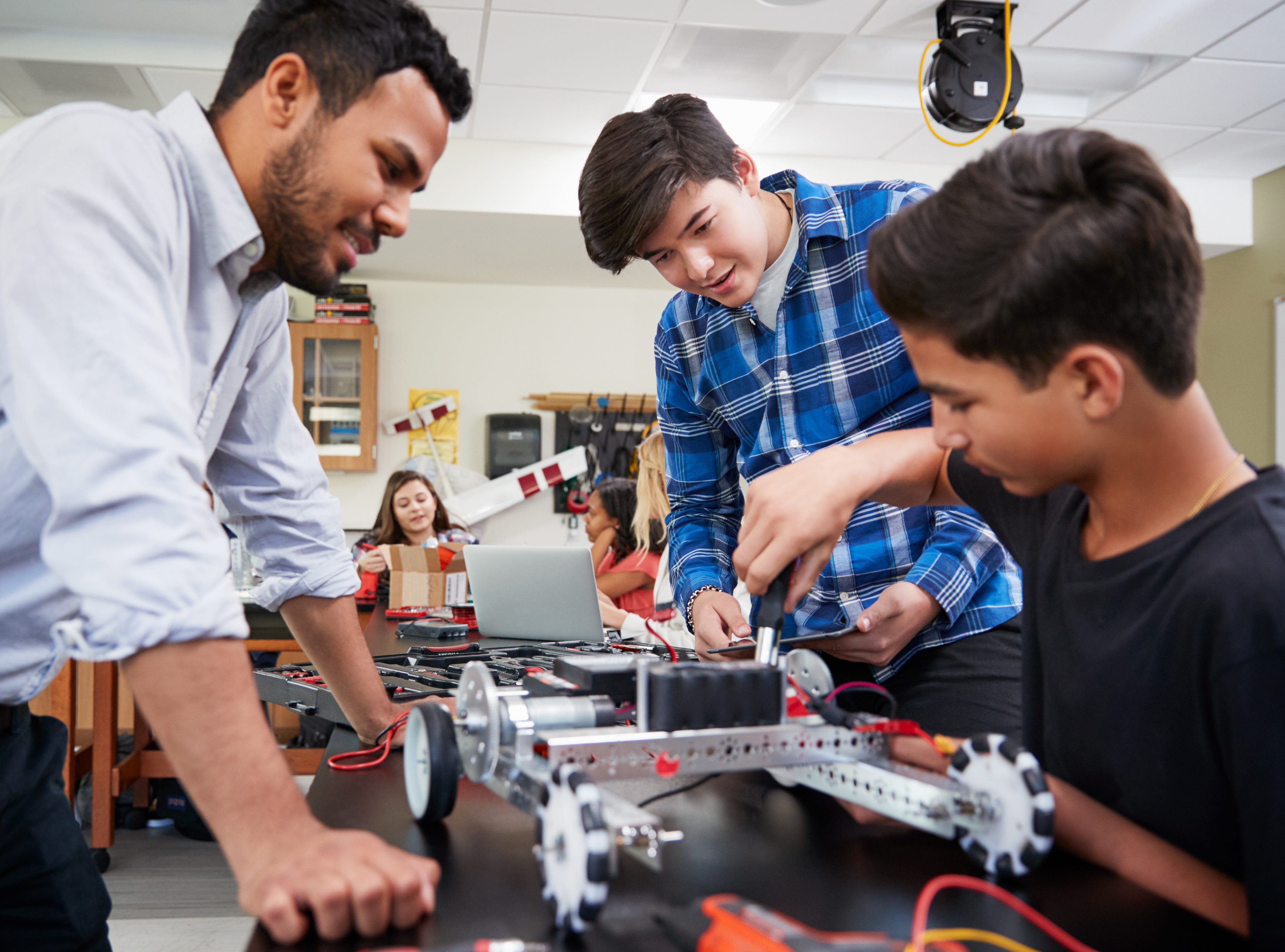
When these two students were together, just bantering, I noticed a healthy level of respect for one another’s extracurricular activities. At the same time that they each had a good sense of self based on skills they had developed outside of academics, they poked a little fun at themselves for what they didn’t get about what the other one spent so much time doing. Subtly, he appreciated that she knew how to set and spike a ball; she admired his ability to put contraptions together.
The Play Just Might Be The Thing
Making the 35 minute drive back up to school for special events on evenings or weekends is a challenge for me, (and for other faculty and staff, too). I have done it a few times, but I didn’t get to see the school play last weekend. It was a murder mystery, with audience involvement.

Still, I plan to send congratulatory notes to each of the students who participated. One of the adults — also a Math teacher — who directed the production told me last week that one particular parent, after the show, was practically thunderstruck by the boost in self-confidence that her own child had demonstrated, thanks to the whole process of rehearsing and putting on a play in a group context. He had felt seen and heard, even before the audience took their seats, and that counted for a whole lot.
As for me, I may not be getting any better at either playing classical piano or playing tennis, both extracurricular activities I did back in high school, but I keep up each of these pursuits, for the sheer joy they bring me.
Do you think that the term “extracurricular activities” describes much of what we do well beyond high school?